
 1 month ago
3
1 month ago
3
ARTICLE AD BOX
Last night, Benito Antonio Martínez Ocasio, aka Bad Bunny, headlined the 2026 Super Bowl halftime show and became the first musical artist to perform in Spanish, bringing Puerto Rico and its culture to the Santa Clara football field.
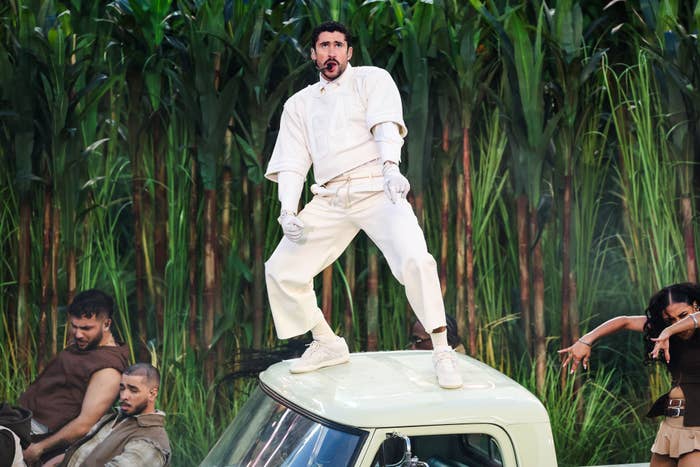
Kindell Buchanan - Pa Images / Getty Images
It has already been named one of the most-watched halftime performances, with viewership exceeding 135 million, according to CBS.
And since he fit so many cultural and historical references within his 13-minute performance, I, a writer with Puerto Rican roots, had to list all of them below:
Also, if I missed anything, PLEASE let me know in the comments below.
1. The show begins with a man playing the guitar while wearing a pava in front of a sugarcane field, who says, "Qué rico es ser Latino," which translates to: "How wonderful it is to be Latino."
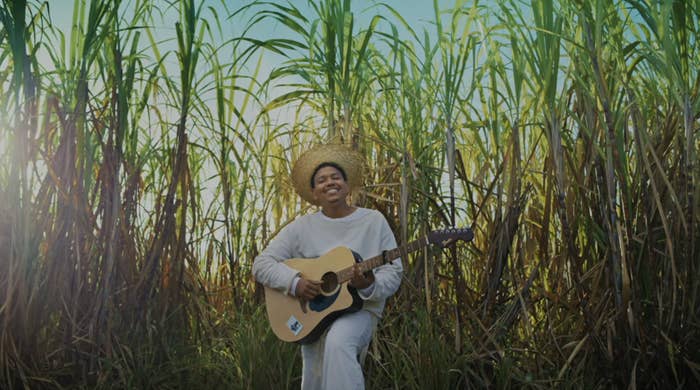
2. Next, you see men and women walking the sugarcane fields, along with Bad Bunny, all wearing white or cream and a hat. The pava hat, usually made of palm leaves or straw, was worn by workers who cultivated crops like sugarcane or coffee to protect them from the sun. It is also known as the jíbaro hat, which refers to the citizens of Puerto Rico (the Jíbaros) who lived in the countryside.
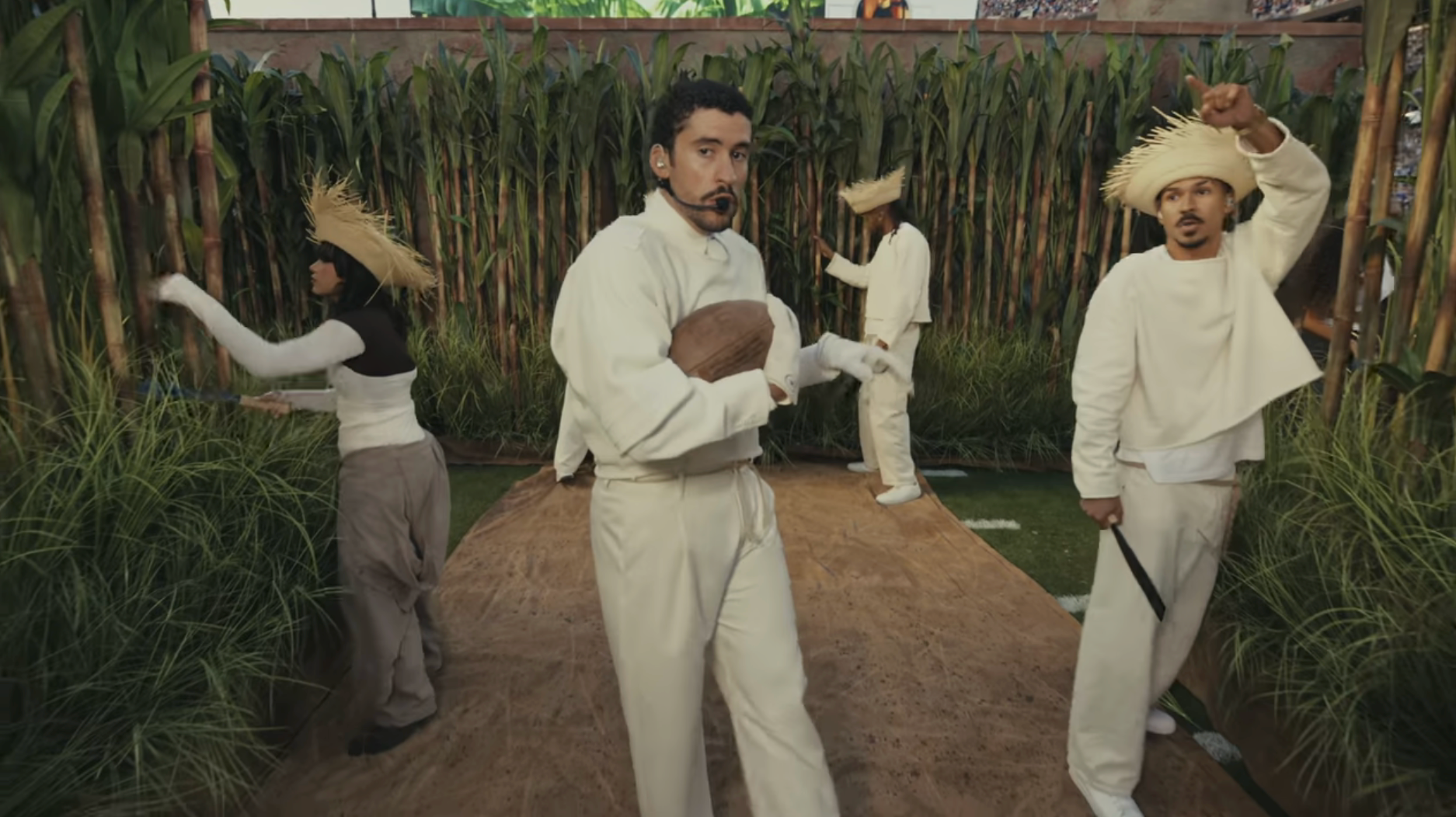
3. As for the sugarcane fields, they were established around the 16th century and eventually became sugarcane plantations in Puerto Rico after Spanish colonization of the island. As a Spanish colony for over 400 years, Puerto Rico was required to ship sugar and coffee to Europe to aid in Spain's economy, and eventually to the US, through the forced work of enslaved Africans and the Indigenous Taíno and Puerto Rican population. Slavery ended in Puerto Rico in 1873, only 153 years ago; however, the enslaved individuals were required to work an additional three years before they were officially "free."
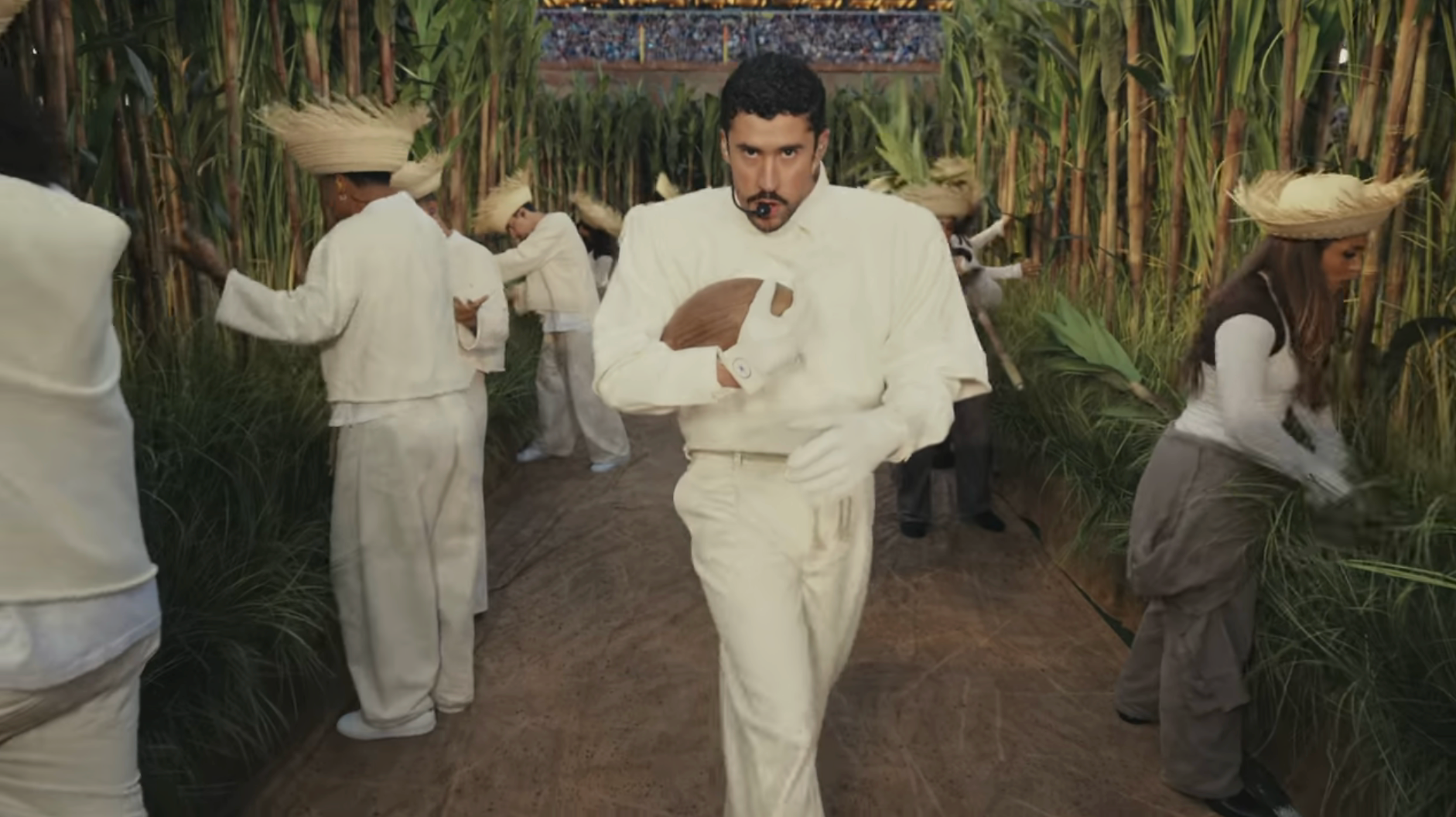
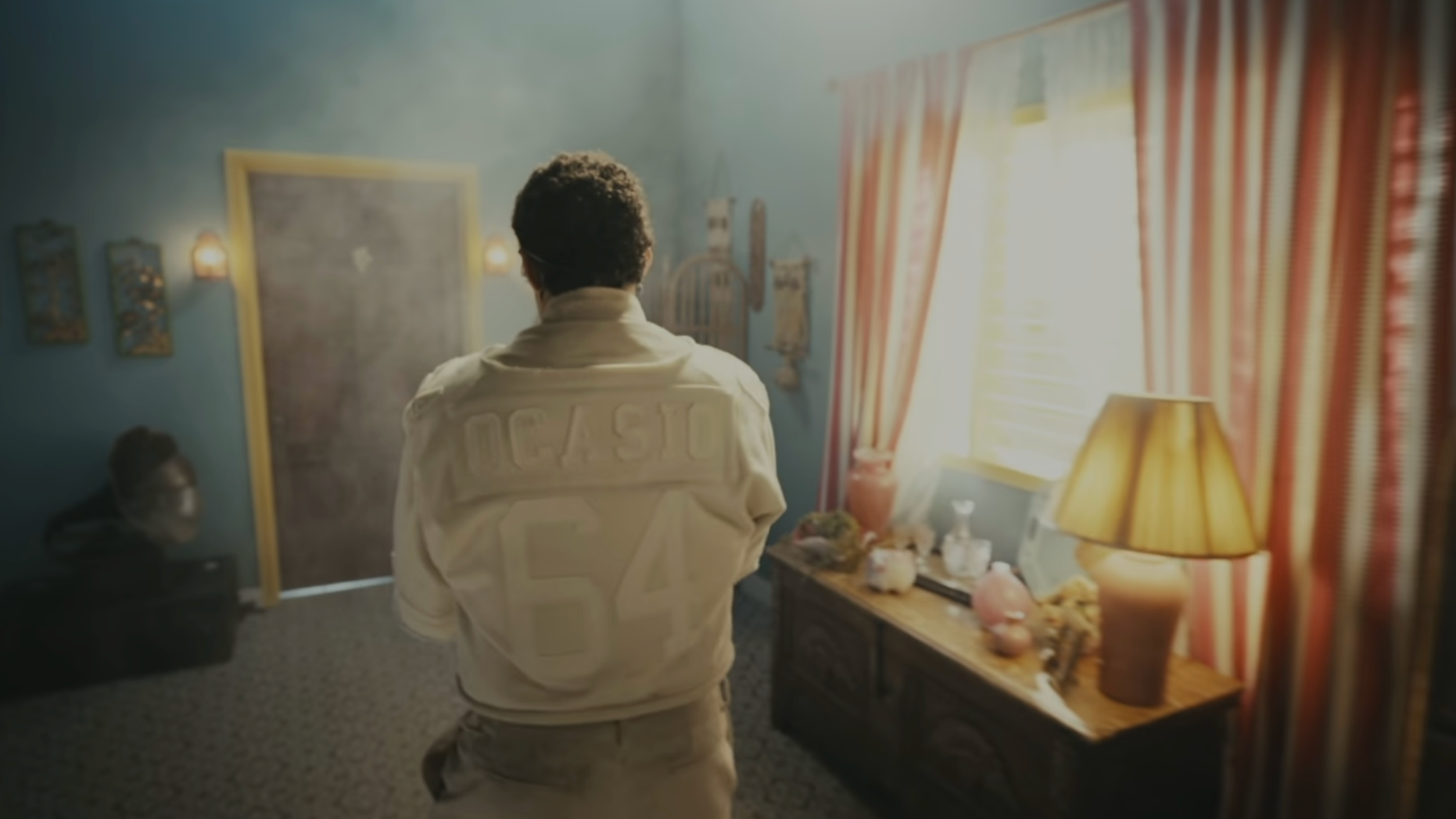
4. Bad Bunny's outfit is also packed with symbolism. The back of his "football jersey," made by the Spanish company Zara, featured his last name, Ocasio, whereas the number "64" may have multiple interpretations, all of which still need to be confirmed by the musical artist. For example, some people believe the number represents Bad Bunny's mother's birth year, "1964," whereas others are speculating that it refers to the initial government death toll for Hurricane Maria. Complex reported last night that it most likely refers to Bad Bunny's uncle, who wore the same number while he played football.
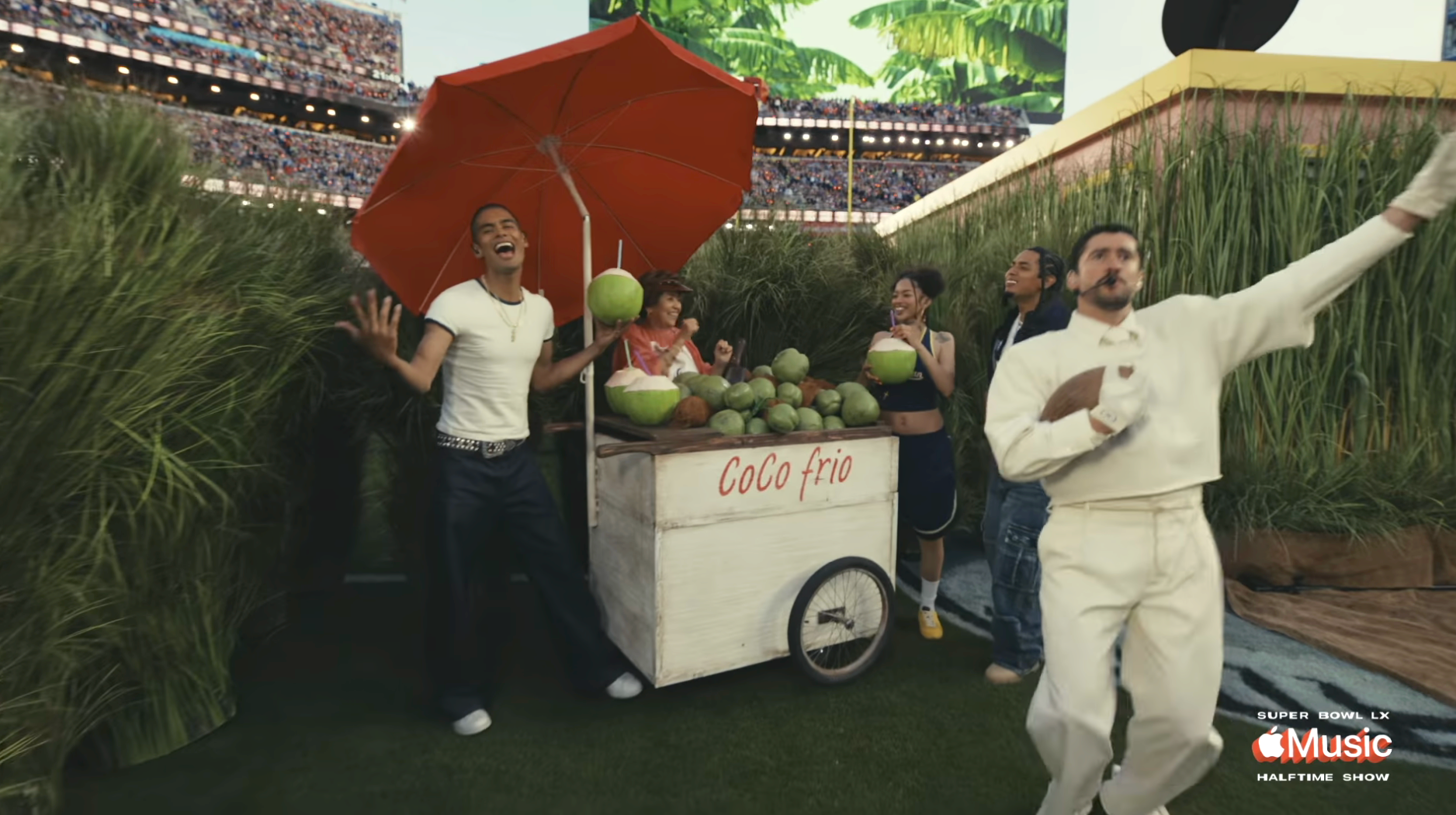
5. As Bad Bunny continues to walk through the sugarcane field, while singing "Tití Me Preguntó," he comes across a coco frío (cold coconuts) cart, which is a nod to the street vendors who sell fresh coconut water on the island.
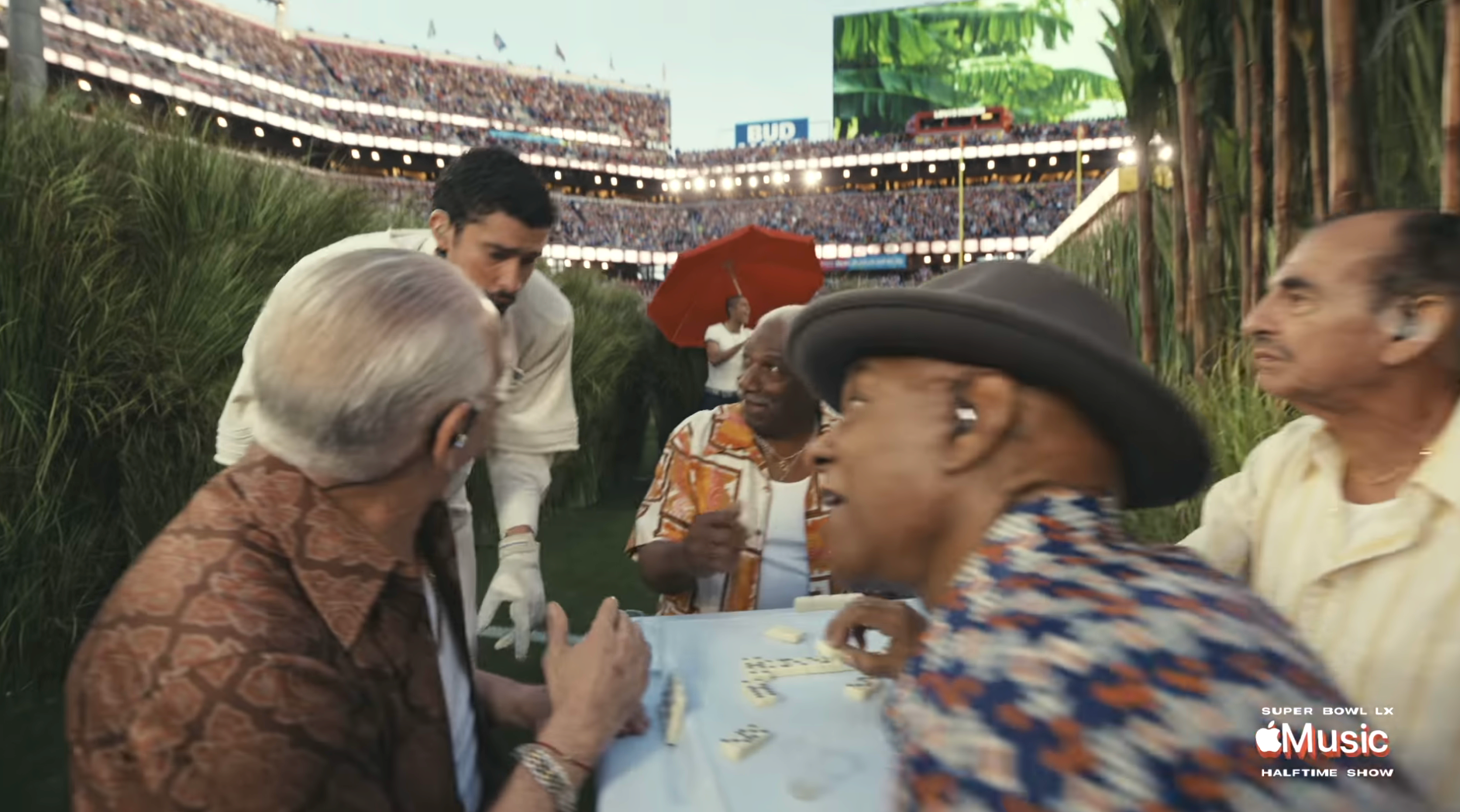
6. Next, he meets a group of older gentlemen playing dominoes. If you don't know, dominoes is a Puerto Rican (and Caribbean) pastime that's played amongst generations. It's loud, it's social, and incredibly fun. (I used to play a lot with my grandma when I was younger, and she used to slam the finishing piece on the table.) It's also a game rooted in culture and history, connecting with traditions, the diaspora, chisme (gossip), and family.
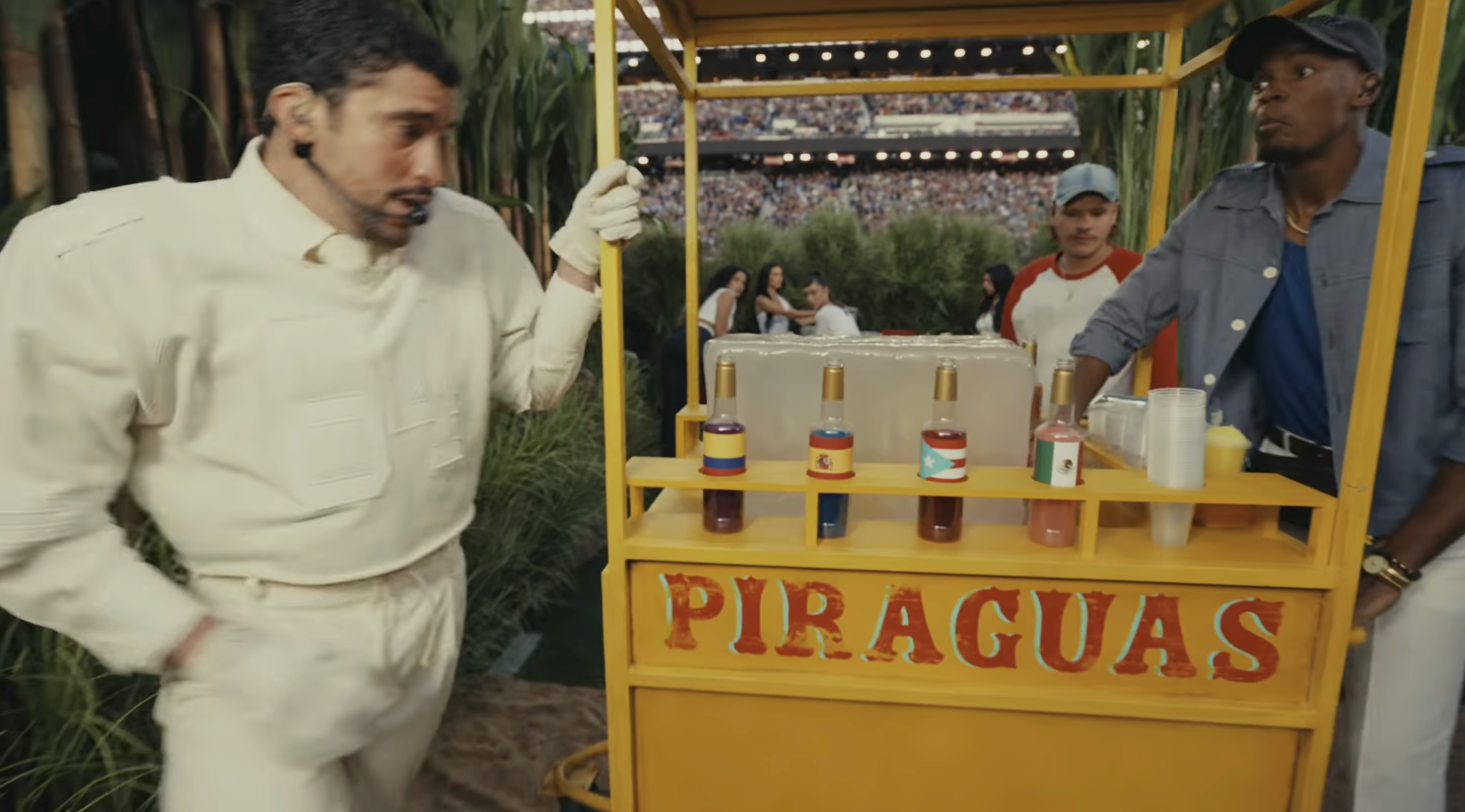
9. Next up is the piragua stand, a Puerto Rican dessert that's made of shaved ice and different flavored syrups, which can be found all over the island. Here you can find that each flavored syrup is decorated with a different flag, including Colombia, Spain, Puerto Rico, and Mexico.
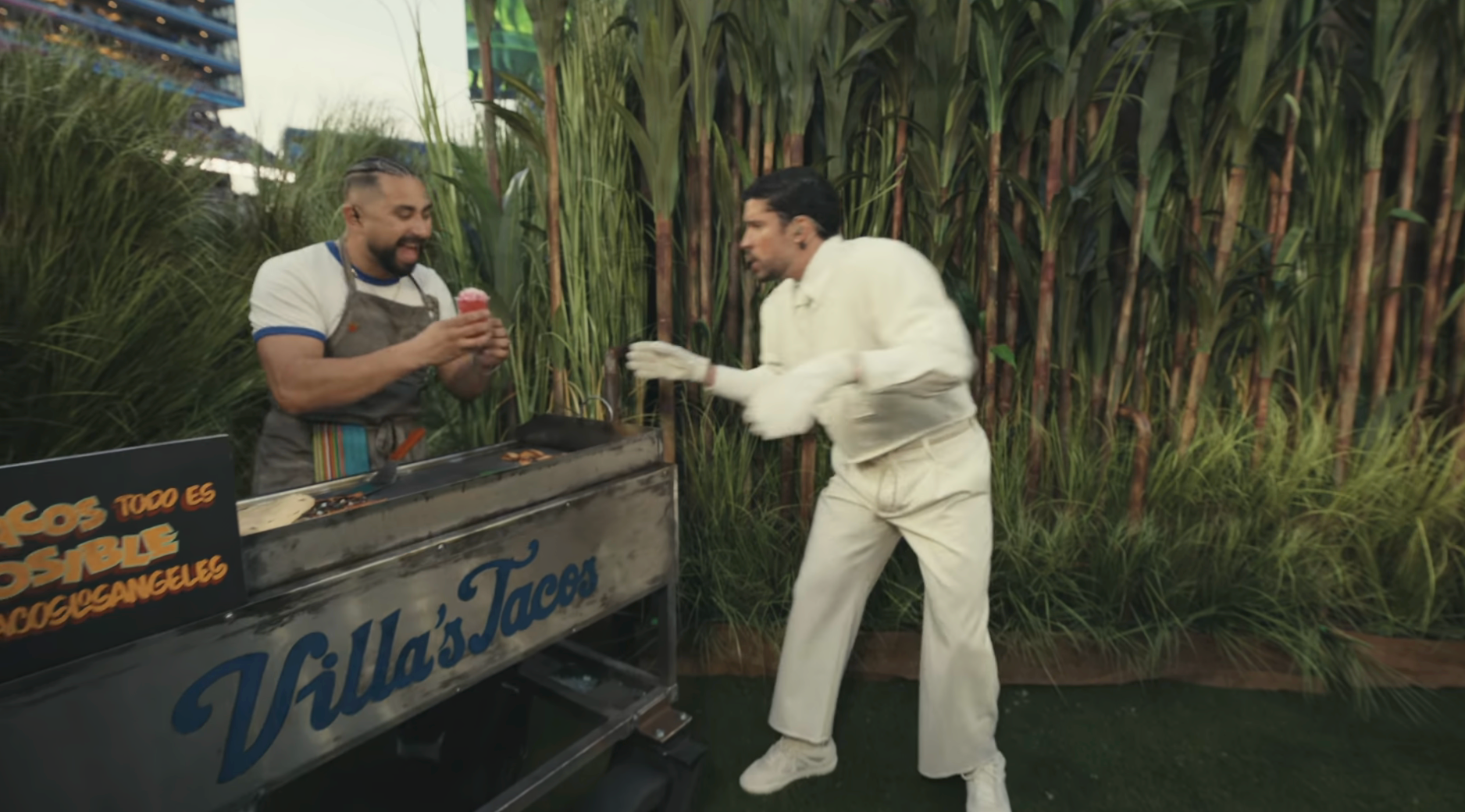
10. Bad Bunny also paid homage to Latin California culture by featuring a real Los Angeles immigrant-owned business, Villa's Tacos. According to the owner, Victor, Bad Bunny is a fan of his tacos and asked him to be on set for the big day.
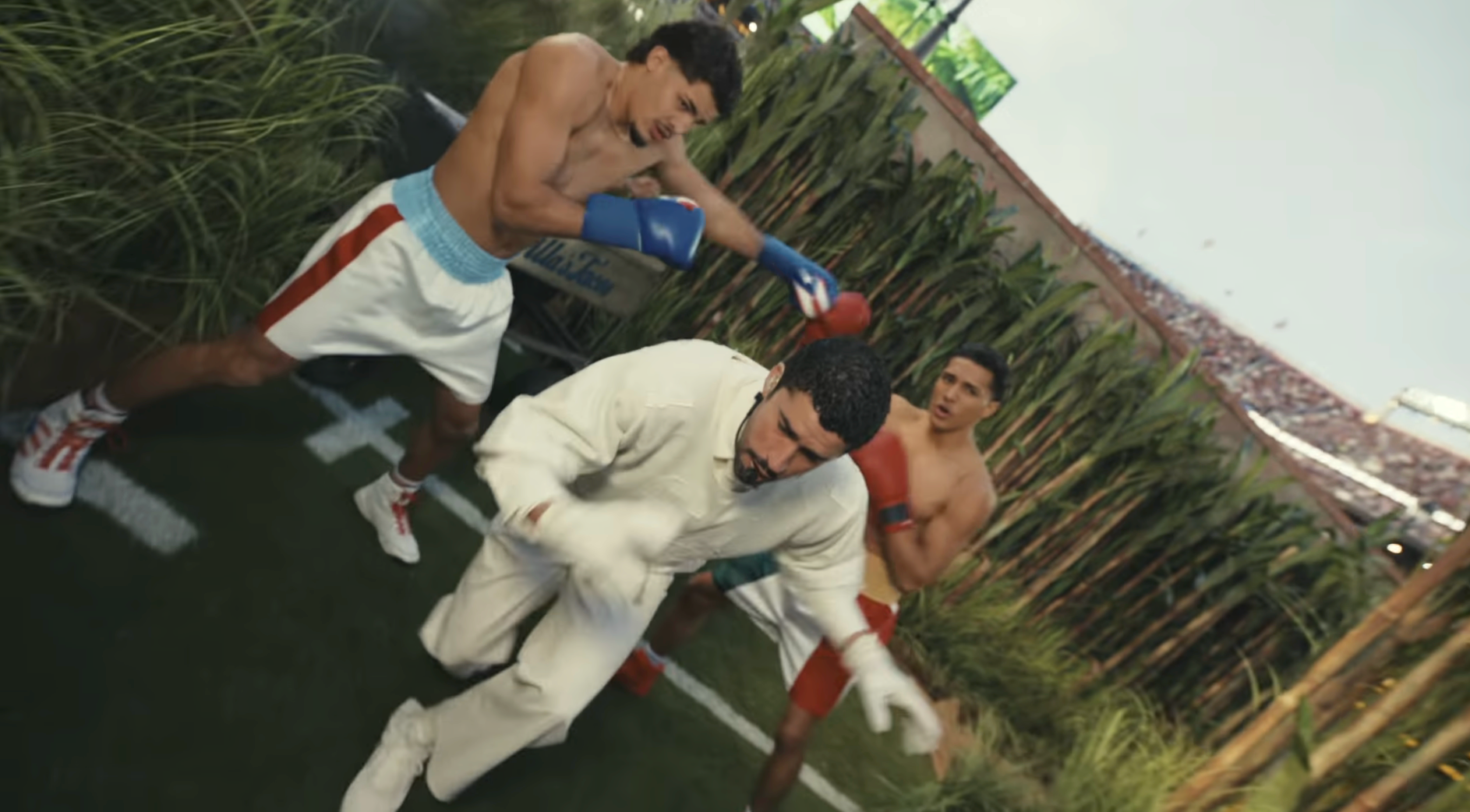
11. He then dances through two boxers fighting, who are each wearing their respective flags of Puerto Rico and Mexico. Boxing has been a huge sport in Puerto Rico since the 20th century, with these two Latin nations having a huge rivalry.
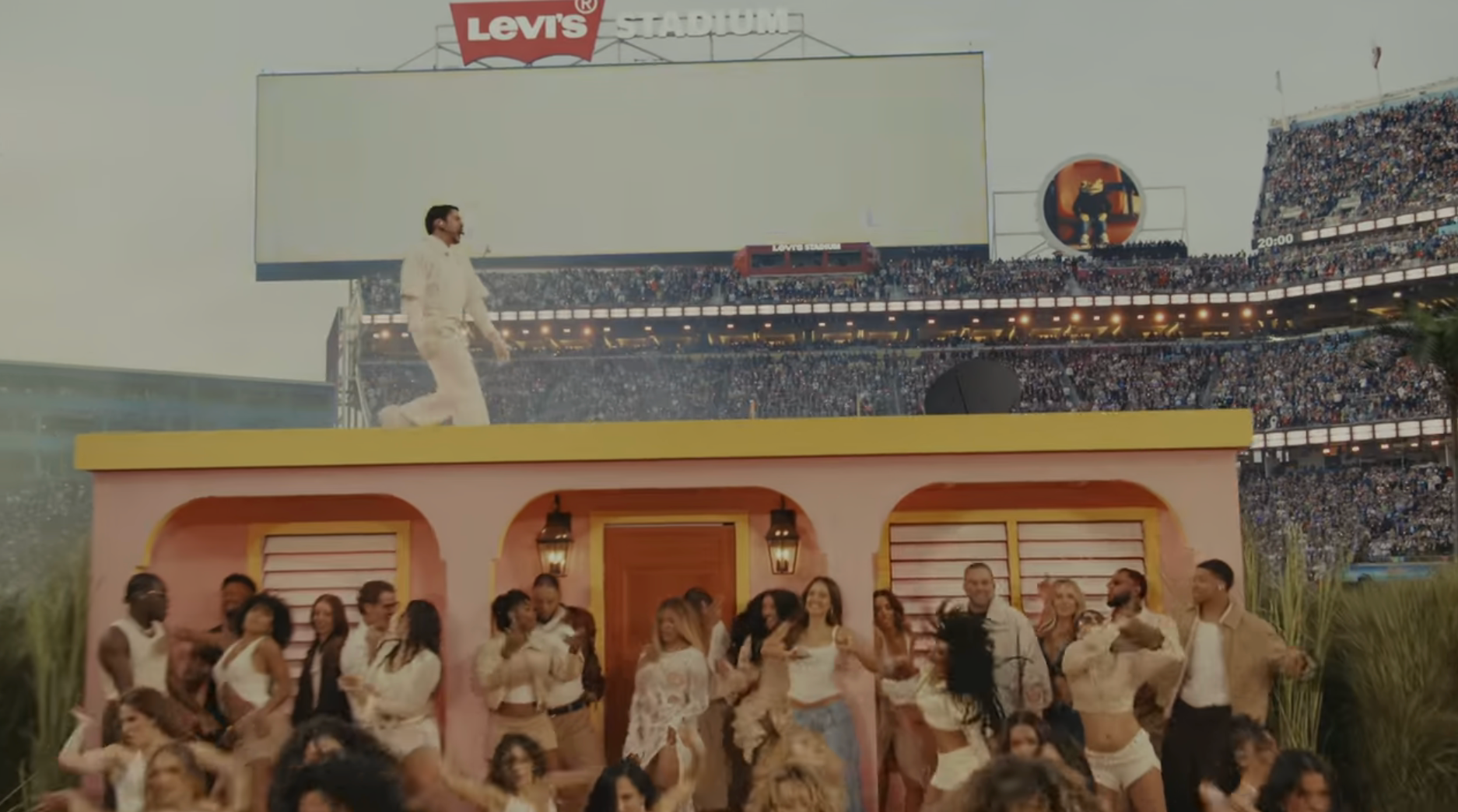
15. The little frog in the circle at the top right is Puerto Rico's Sapo Concho, which is a toad native to the island. Bad Bunny has made the amphibian his mascot for the album DeBí TiRAR MáS FOToS.
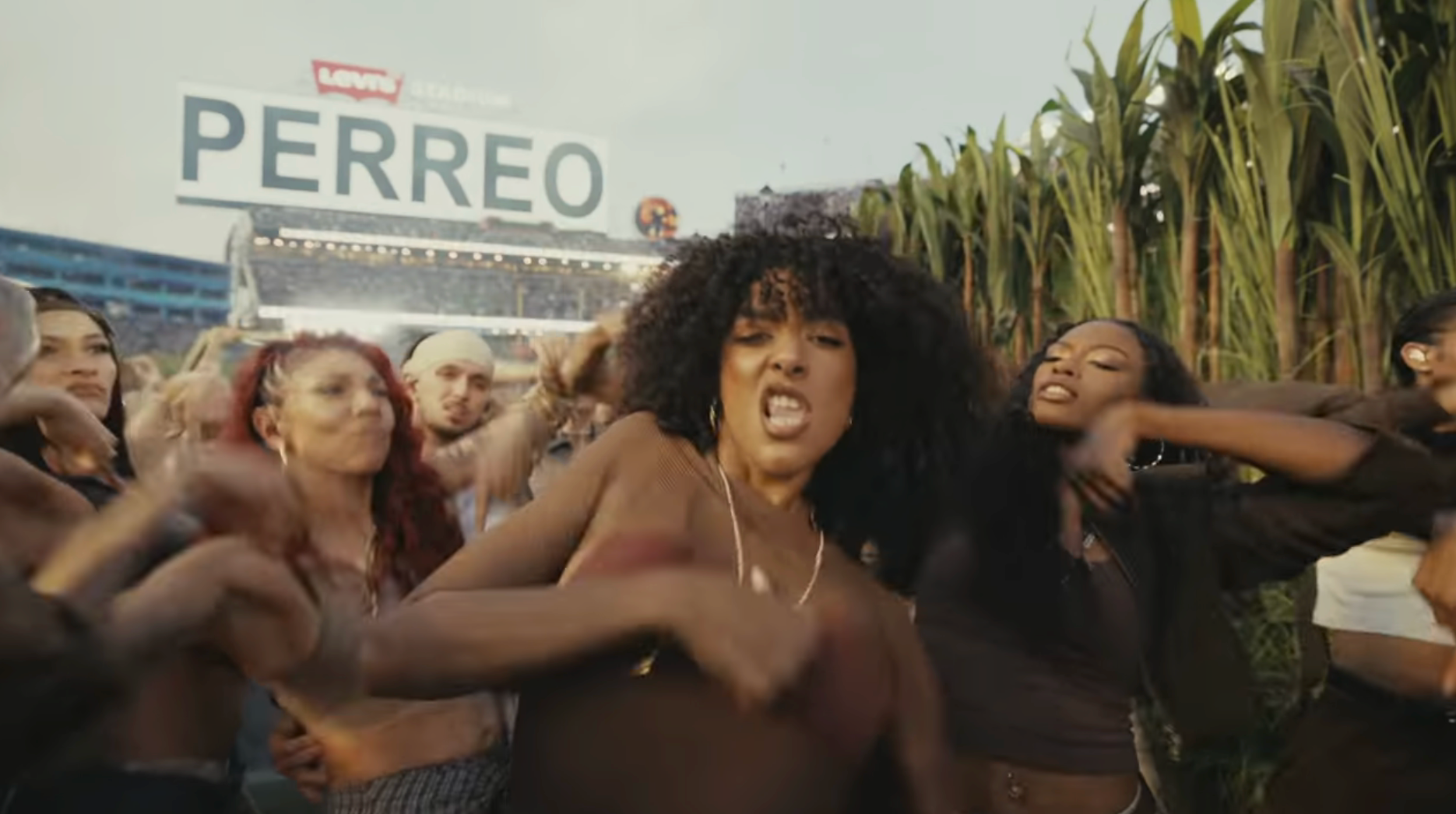
16. Reggaeton is deeply part of Puerto Rican culture. Its roots can be traced back to early '90s Jamaican reggae, so it makes sense that Bad Bunny would pay tribute to fellow musical artists by playing clips of famous songs by reggaeton icons such as Tego Calderón, Don Omar, and Daddy Yankee.
17. While violinists played "Monaco," Bad Bunny gave a powerful speech in Spanish: "Mi nombre es Benito Antonio Martínez Ocasio, y si hoy estoy aquí en el Super Bowl 60, es porque nunca, nunca dejé de creer en mí. Tú también deberías de creer en ti. Vales más de lo que piensas. Confía en mí," which translates to: "My name is Benito Antonio Martínez Ocasio, and if I'm here today at Super Bowl 60, it's because I never, ever stopped believing in myself. You should also believe in yourself. You're worth more than you think. Trust me."
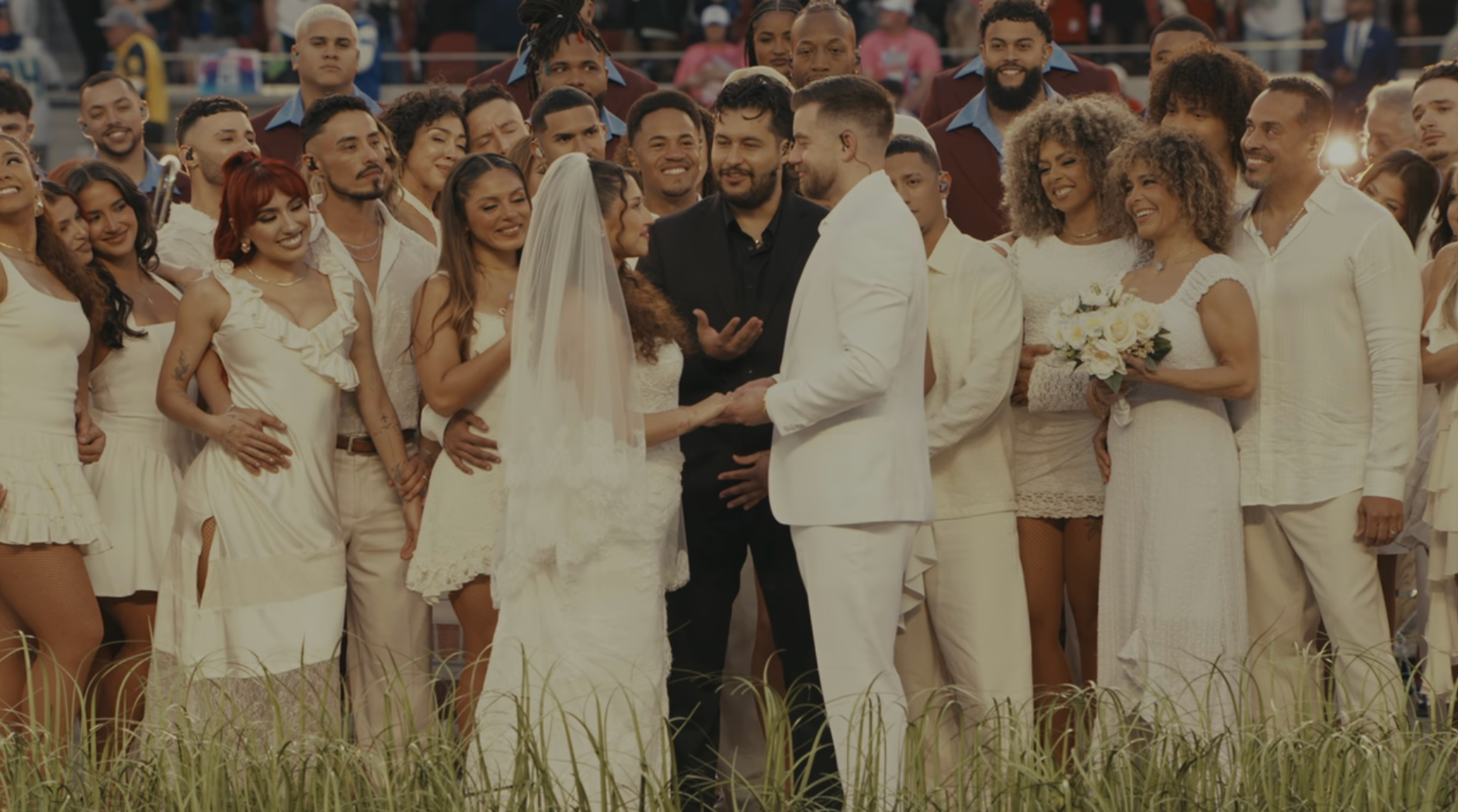
18. The wedding that occurred was real! NBC Sports reporter Rohan Nadkarni tweeted that the couple actually got married during the halftime show. According to Bad Bunny's team, the couple originally invited the singer to their wedding, but instead, he invited them to get married during the show. What better way to celebrate love than by having a couple get married in real time! The couple also got to cut a cake from Valencia Bakery, which is a staple in New York.
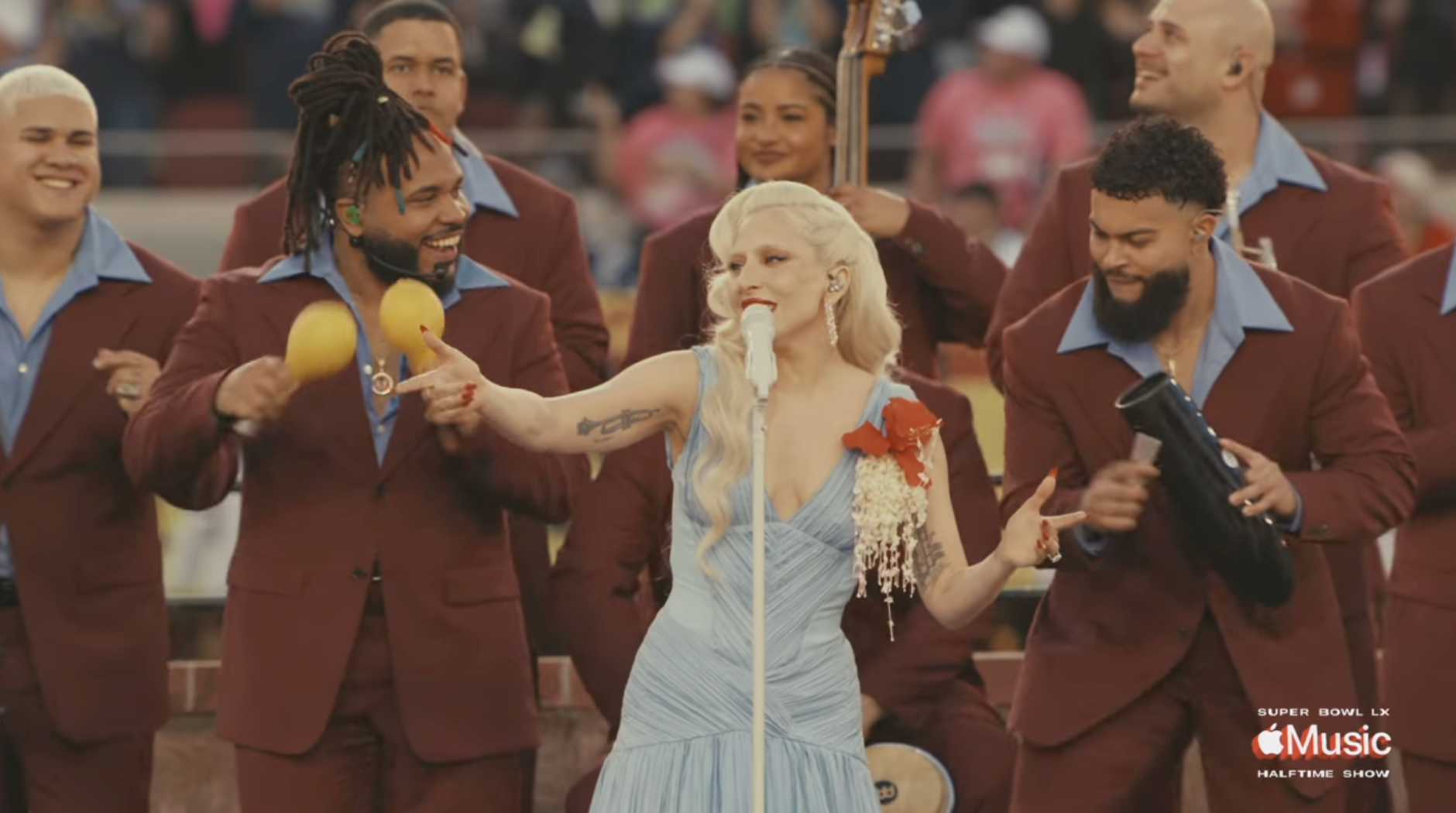
19. Lady Gaga made a surprise appearance at the halftime show to sing a salsa rendition of "Die With a Smile." She also chose to honor Puerto Rico through her clothing. According to Marie Claire, she wore a custom Luar gown created by Dominican designer Raul Lopez, and styled by Chloe and Chenelle Delgadillo. The azul celeste blue pays homage to Puerto Rico's original flag, which is used today to celebrate independence. The red Flor de Maga flower is native to Puerto Rico. It also became Puerto Rico's official flower in 2019.
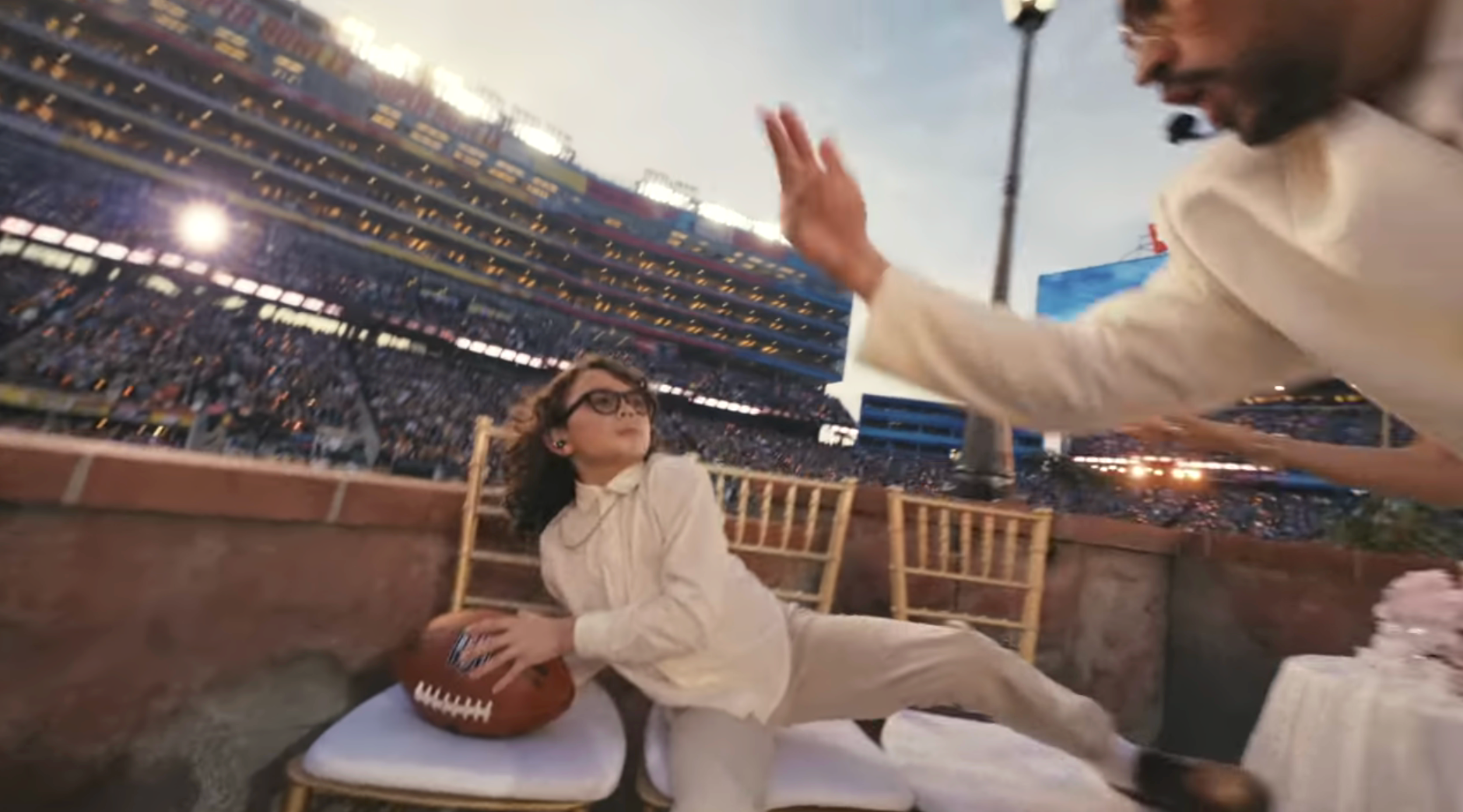
20. If you grew up in a Latin household, you probably were "triggered" by this little nod of Bad Bunny waking up a small child who was sleeping on a set of chairs during the wedding reception. I can count the hundreds of times my uncles or aunts would tap me on the shoulder to wake me up when a certain song came on or to play with my cousins, even at two in the morning.
21. Next, Bad Bunny makes a trip to New York City, aka "NUEVAYoL." Here you'll see a bodega with an EBT sign, a barbershop with a kid getting a haircut and a woman getting her hair braided, and a block party breaking out front. These are just some of the areas where Nuyoricans build community and celebrate their culture.
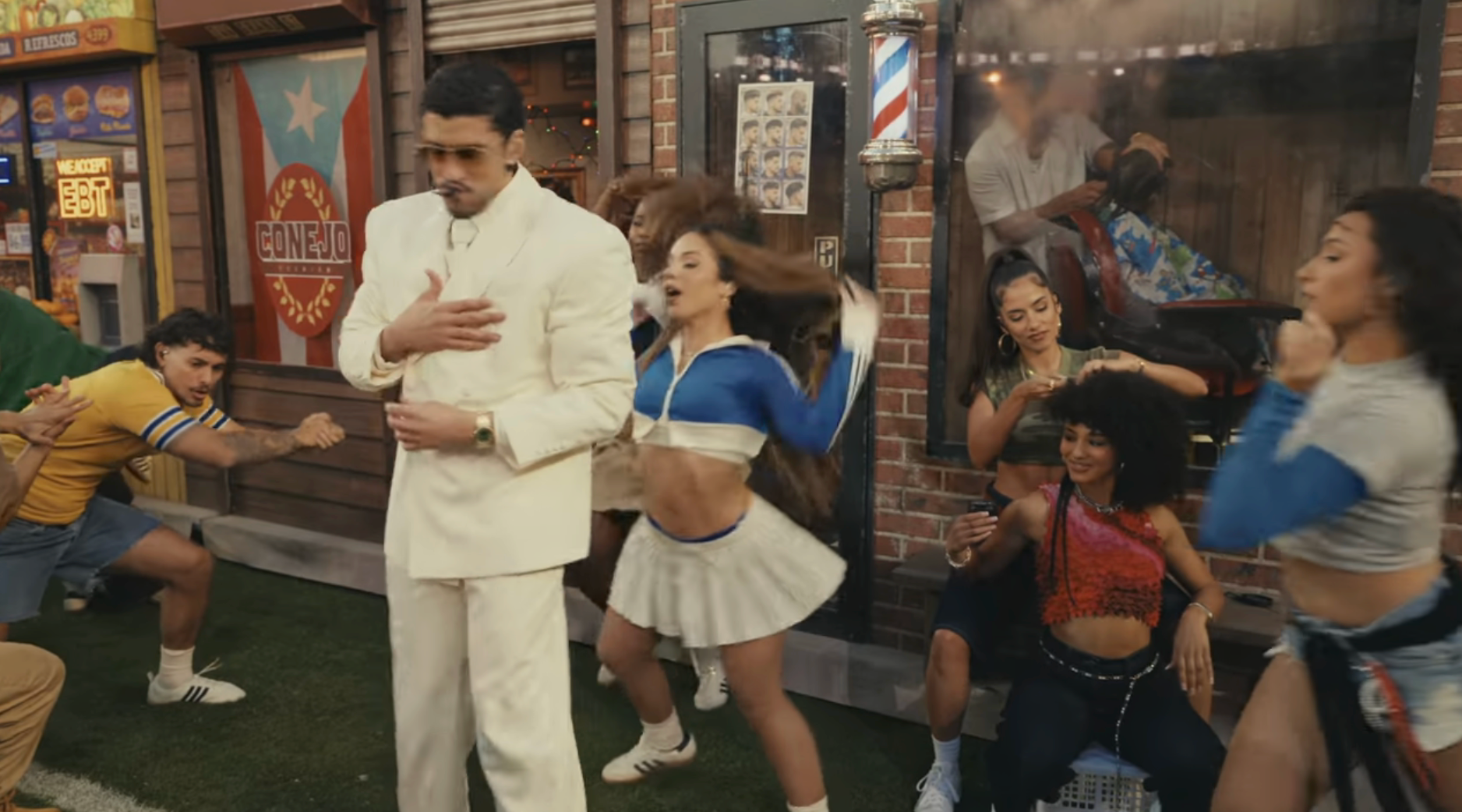
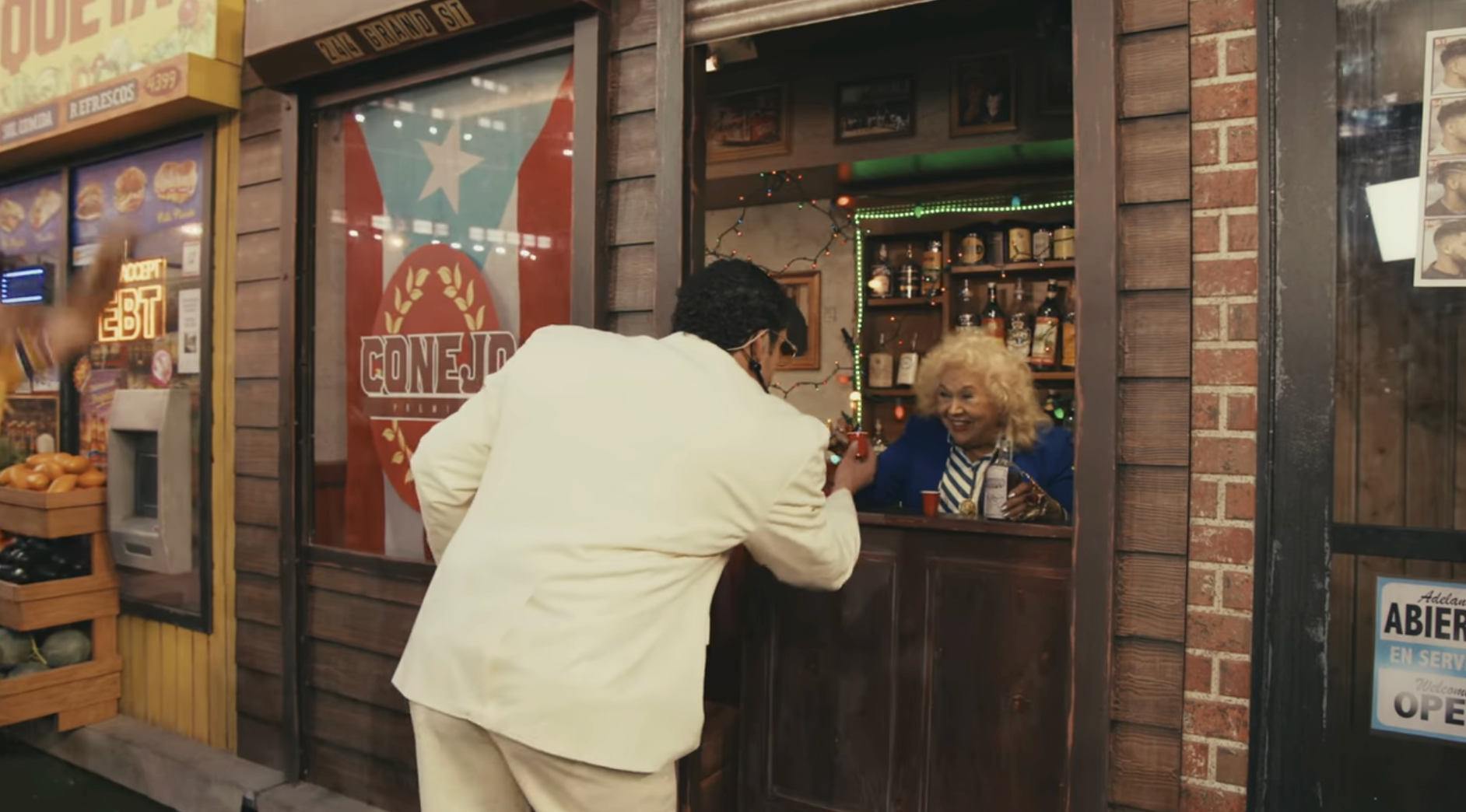
22. What makes this even more special is that Bad Bunny brought Toñita Cay, the owner of Brooklyn’s Caribbean Social Club, one of the last surviving Puerto Rican social clubs in New York City. If you look closely, you will see that the shop name is "Conejo," which means rabbit (like Bad Bunny), the correct address of the Caribbean Social Club (244 Grand St.), and a picture of him and Toñita hugging is hung on the wall. Bad Bunny also included Toñita in the song "NUEVAYoL": "Un shot de cañita en casa de Toñita," which translates to: "A shot of rum at Toñita's house."
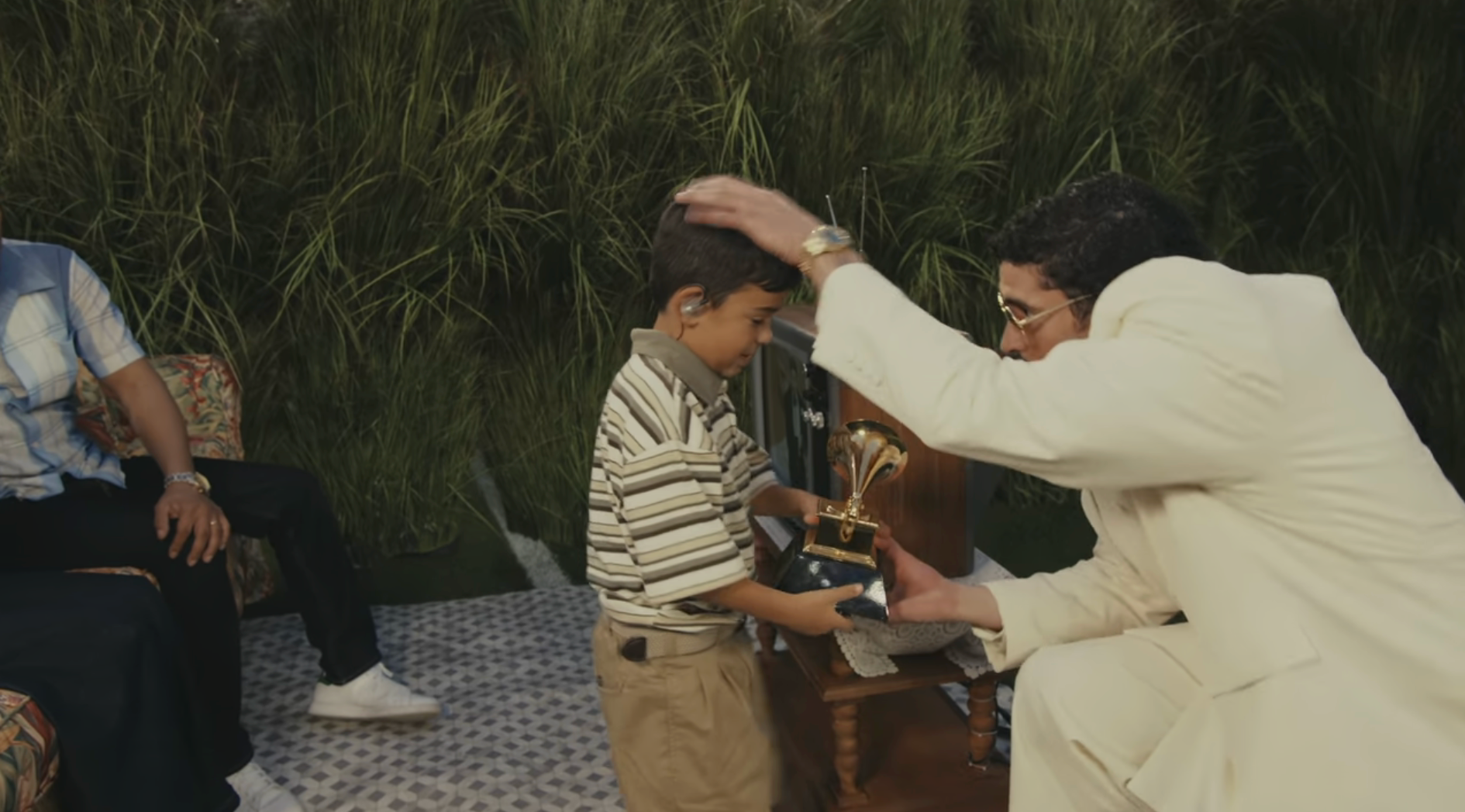
23. This special moment between Bad Bunny and a kid symbolizes him giving his Album of the Year Grammy that he just won the Sunday before to his younger self. As a reference, here is an old picture of young Benito wearing the same outfit.
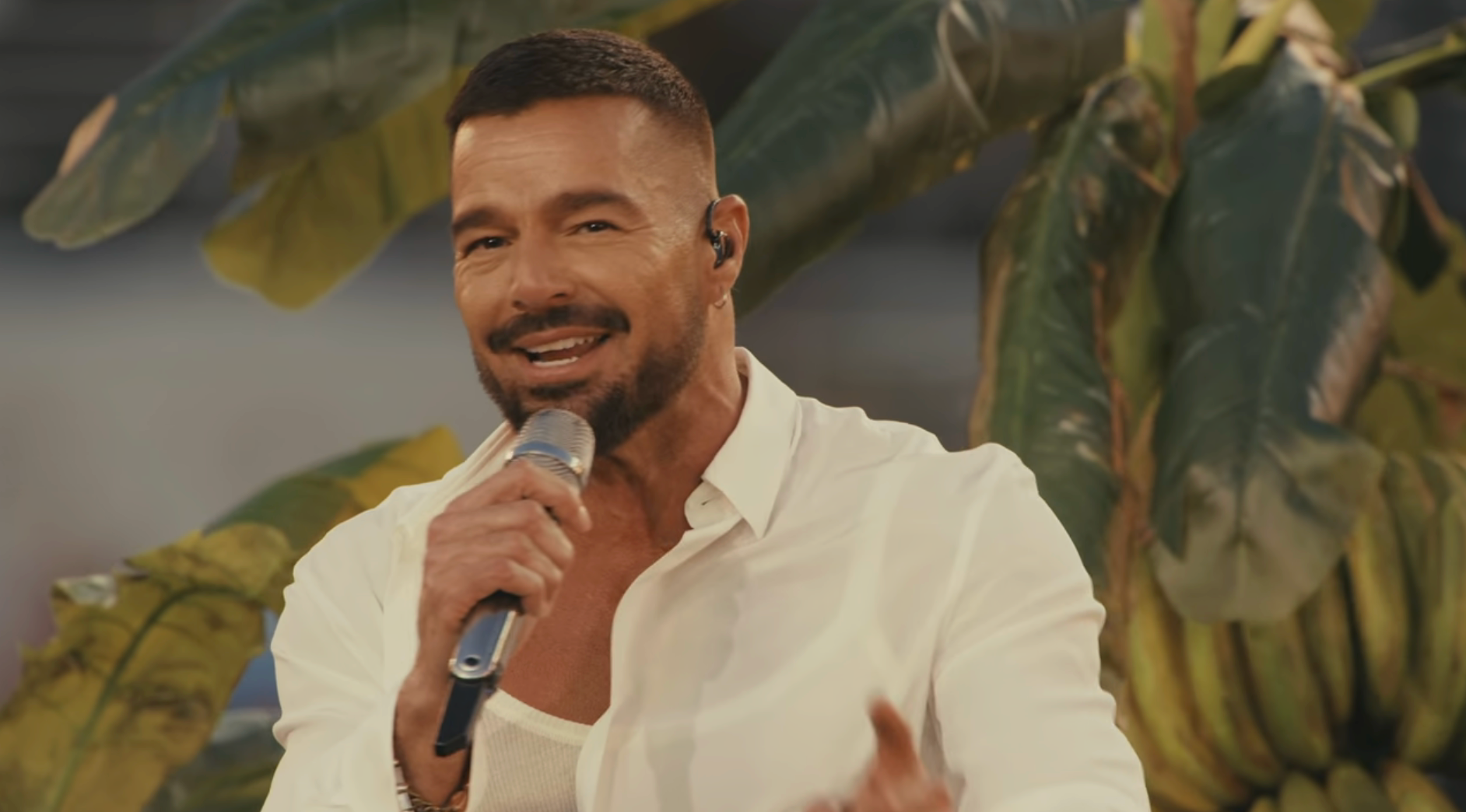
24. When Ricky Martin makes an appearance, who is also a Puerto Rican native, he sings “LO QUE LE PASÓ A HAWAii," which comes directly from Bad Bunny's DeBÍ TiRAR MáS FOToS album. It's a song that highlights what happened to Hawaii under colonization and the "warning" that this could happen to Puerto Rico. One of the lyrics states: "I don’t want them to do to you what they did to Hawaii."
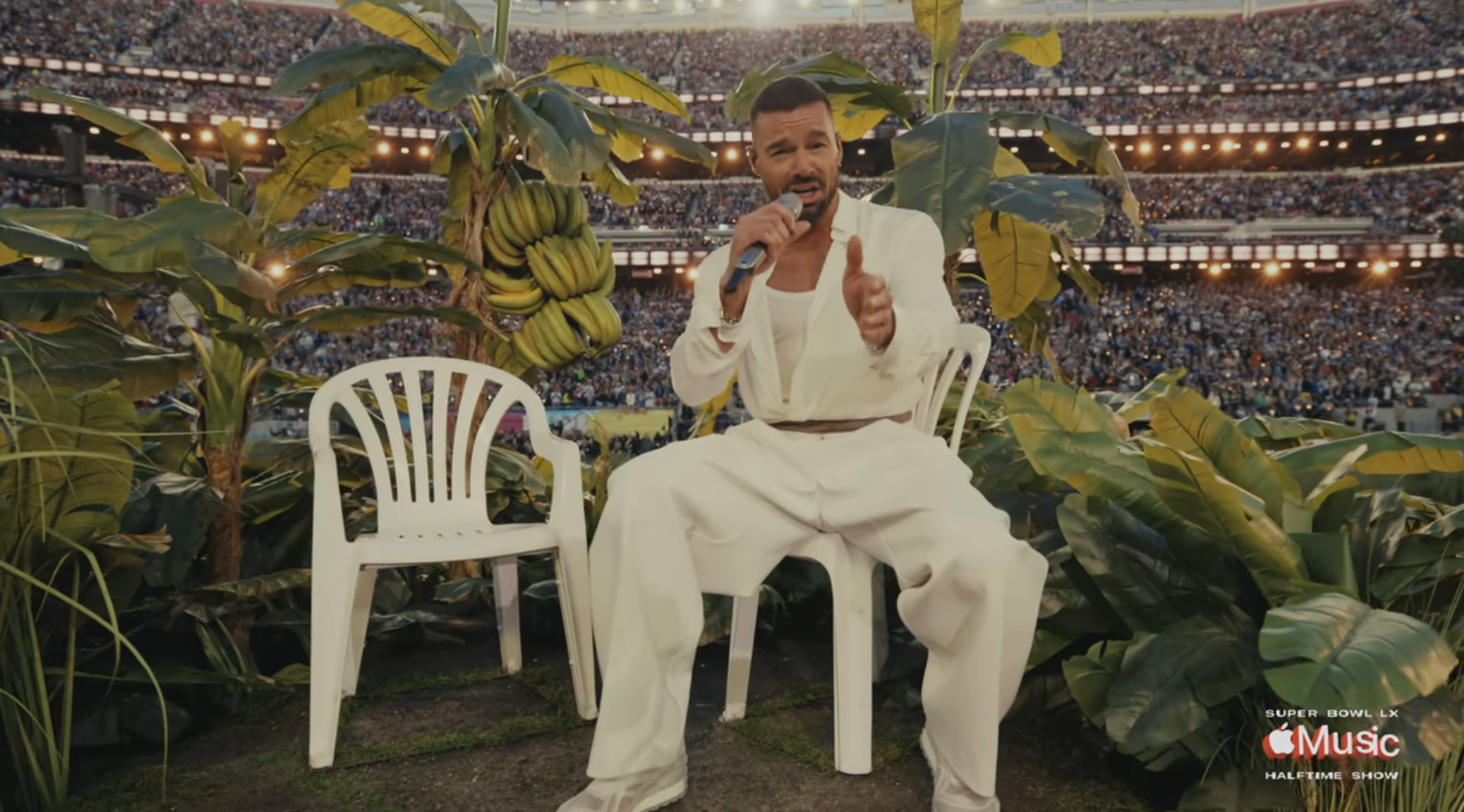
25. The plastic white chairs are also symbolic of the DeBÍ TiRAR MáS FOToS album cover and of Puerto Rican culture at large. You will find them in every social gathering or household. I'm pretty sure I also slept on one of these chairs when I was younger.
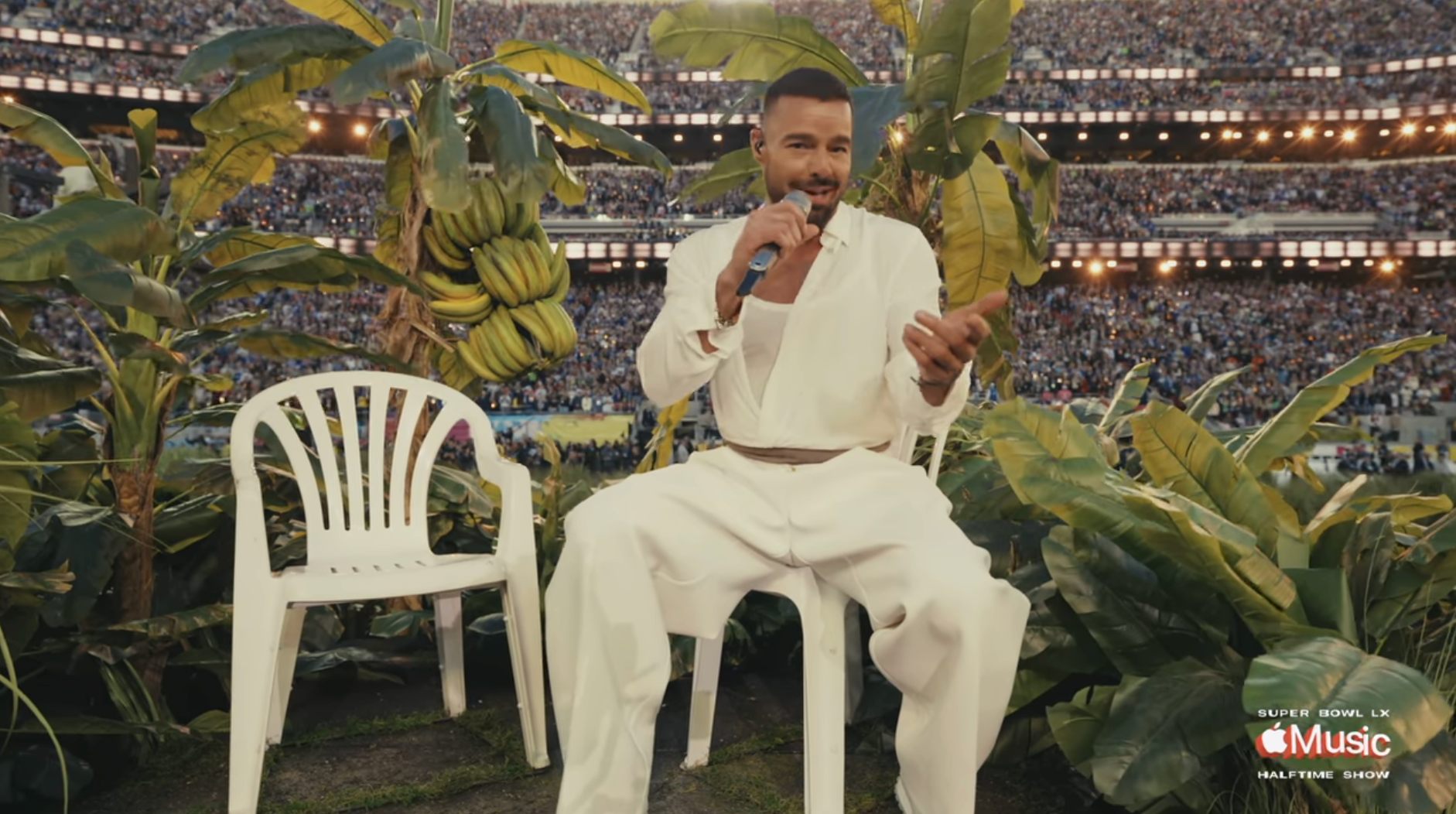
26. Also, it goes without saying how important it is to have Ricky Martin there: for the LGBTQ+ community, for Latin millennials, and for his legacy in America.
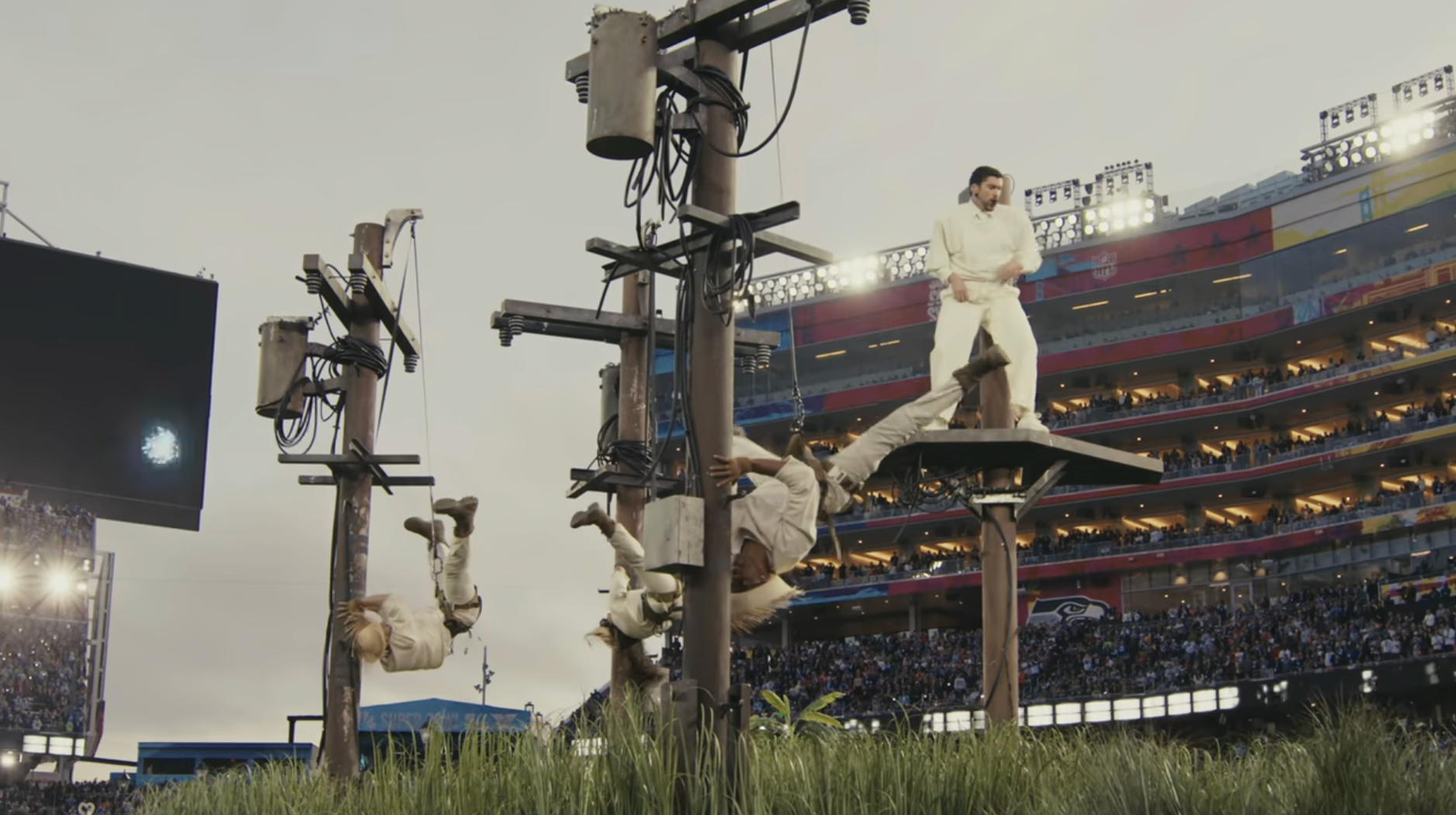
27. Another political statement is when power line poles appear with Jíbaros in pavas. While singing "El Apagón" (The Blackout), Bad Bunny is seen climbing the poles, addressing Puerto Rico's ongoing electrical power crisis. You'll see sparks flying from the power lines, symbolizing the frequent blackouts Puerto Rico experiences during major hurricanes and other harsh conditions. Just like his previous song, Bad Bunny makes a statement with "El Apagón" by calling out the failing infrastructure Puerto Rico often faces.
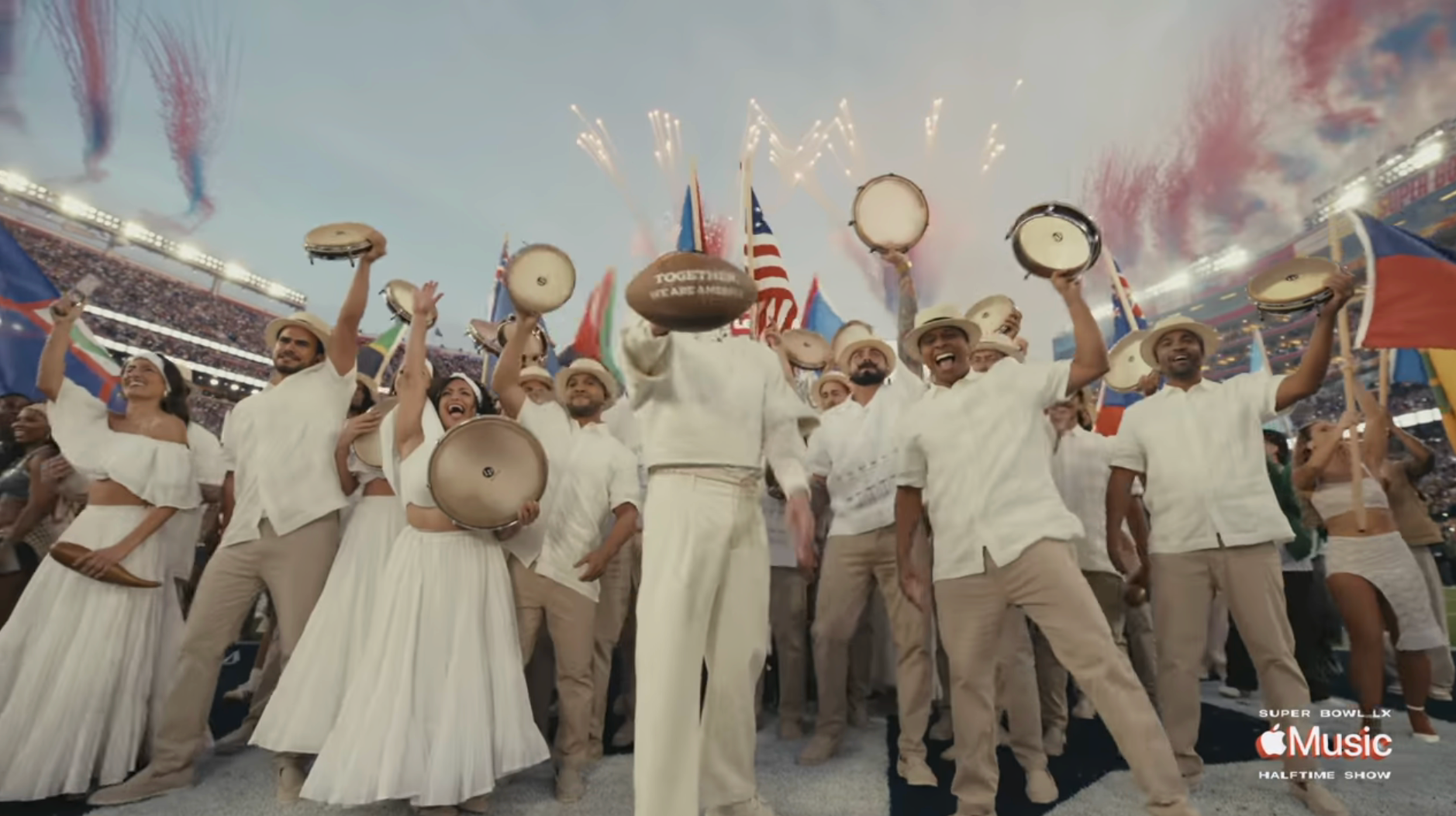
28. At the end, Bad Bunny yells "God Bless America" in English, then continues naming all the countries that reside in the North and South American continents. Behind him are all the respective flags being held by Latin members of the community. This is unifying, stating that we are all America, even those who may be occupied and are unable to vote, like the people of Puerto Rico.
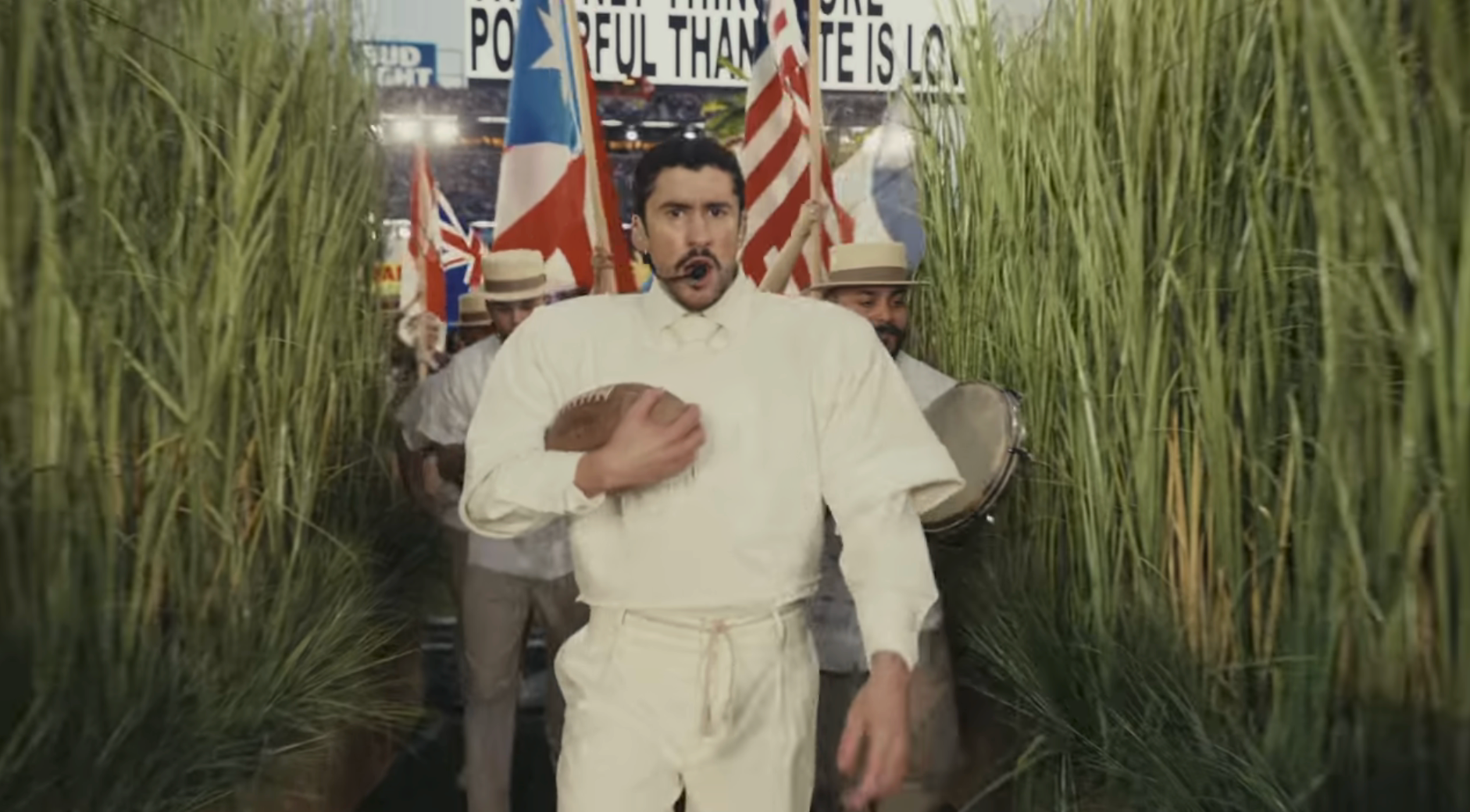
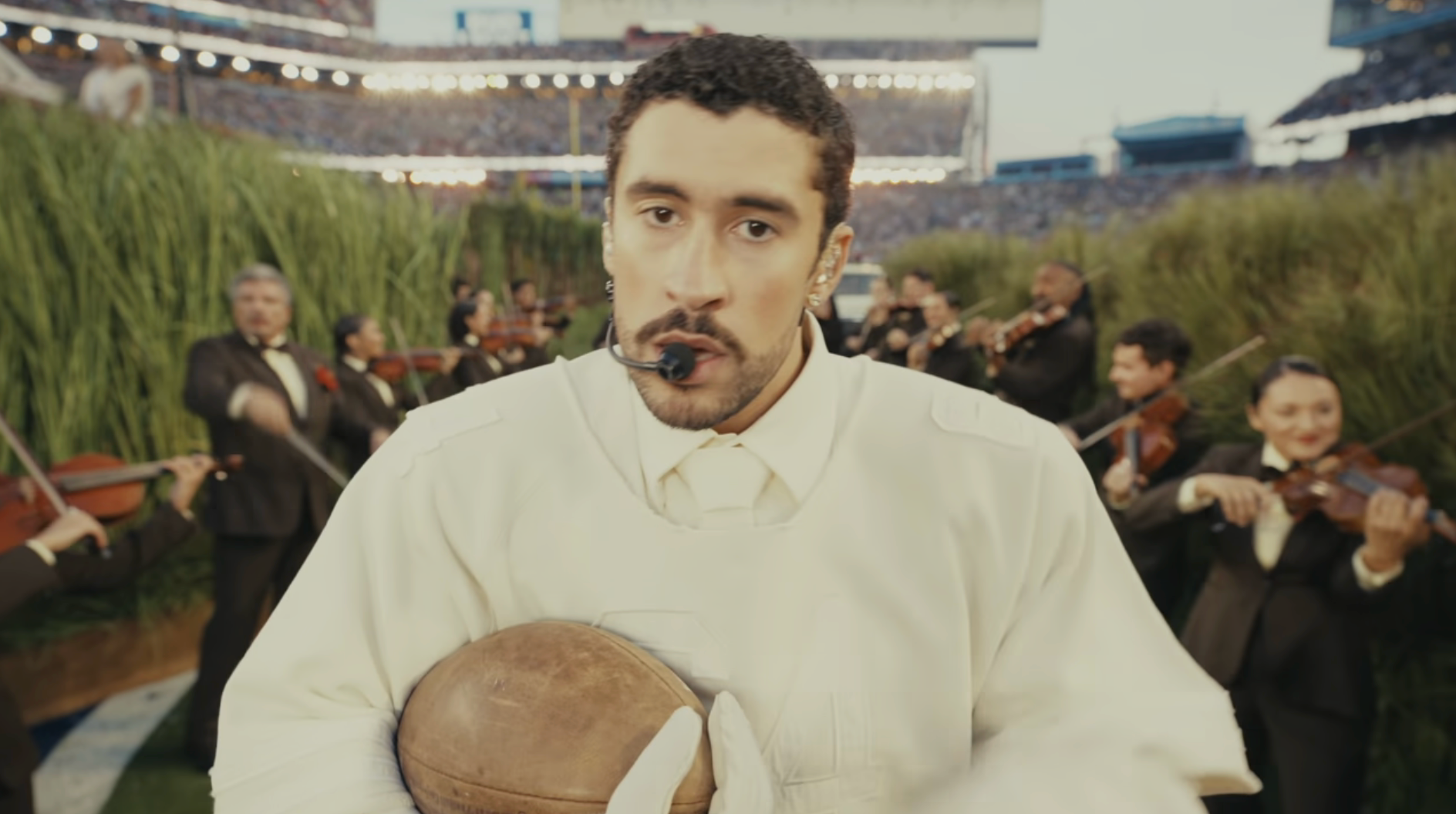
29. Finally, Bad Bunny holds up the football to the camera, and it reads, "Together, we are America." He also does this in front of a billboard that says, "The only thing more powerful than hate is love," a reference to his Grammys speech when he won the award for Best Música Urbana Album last Sunday.


 English (US) ·